Minesweeper Solver reads numbered clues
Each opened number becomes a constraint: the adjacent unknown squares must contain exactly the remaining mine count after known mines are subtracted.
Free Online Minesweeper Solver
Enter opened numbers, unknown squares, and known mines. The Minesweeper Solver checks the local constraints, separates guaranteed logic from probability guesses, and recommends a careful next click in your browser.
Use this combined Minesweeper Solver, Minesweeper Probability Calculator, and Minesweeper Helper for the current board state. Paint each square as unknown, known mine, or an opened number, then analyze which unknown squares are forced by Minesweeper rules.
Optional. If you know the total mine count, the Minesweeper Solver can estimate risk for unconstrained squares too.
Guaranteed safe
0
Guaranteed mines
0
Probability cells
0
No recommended click yet. Add opened numbers around unknown squares or load the sample position.
The Minesweeper Solver proves a square safe only when every valid local mine arrangement agrees. A low probability recommendation is different: it is only the best available guess from the current constraints, not a guarantee.
Probability recommendations are not 100% safe. Some Minesweeper positions cannot be solved by logic and require a guess.
| Cell | Mine probability | Basis |
|---|
This page combines Minesweeper Solver, Minesweeper Probability Calculator, and Minesweeper Helper intent because one board state needs logic checks and probability estimates together.
Paint opened numbers, covered unknowns, and known mines so the Minesweeper Solver can read the same position you see in the game.
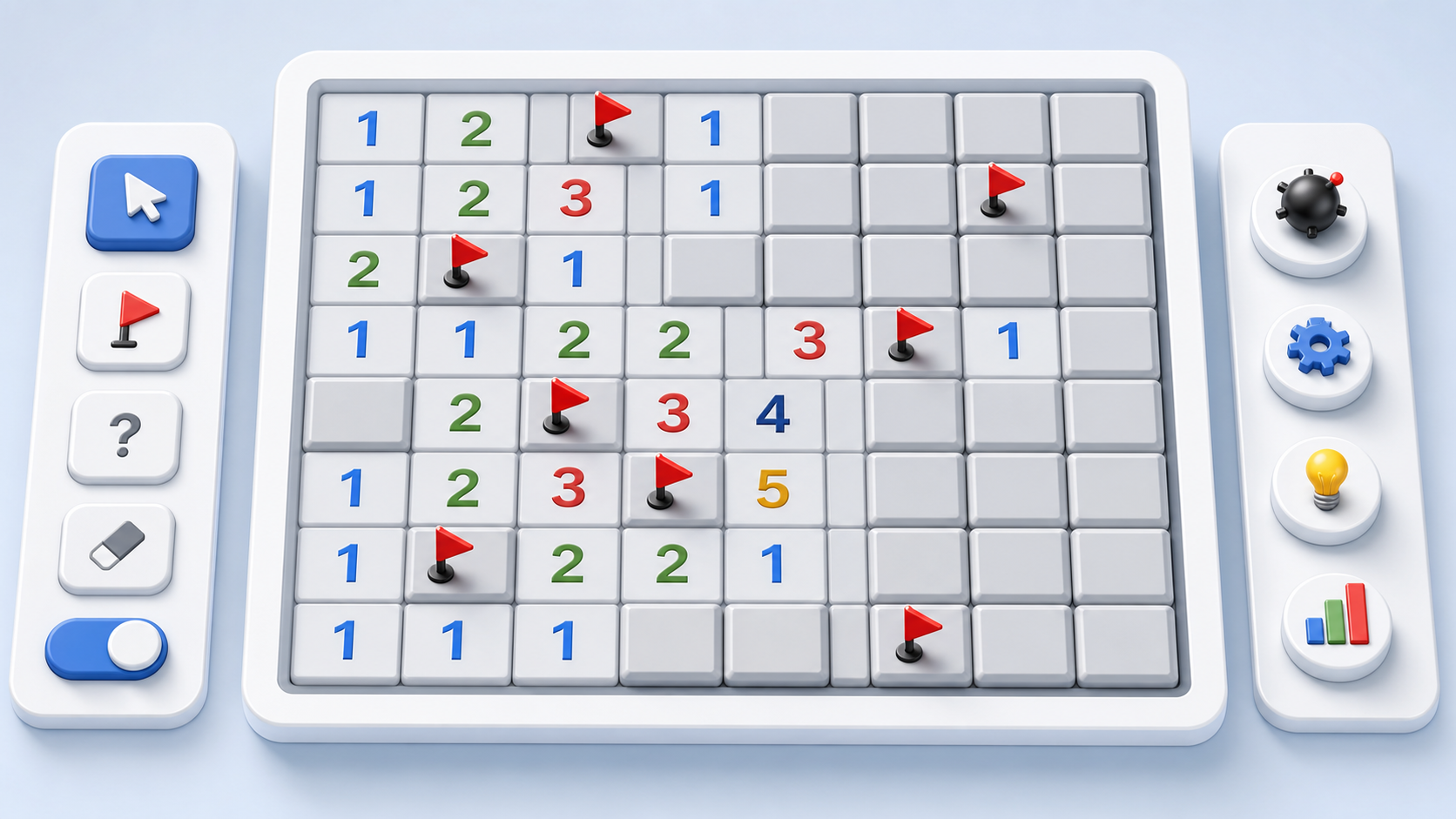
The Minesweeper Solver labels cells that are forced by every valid arrangement separately from cells that only have a lower estimated risk.
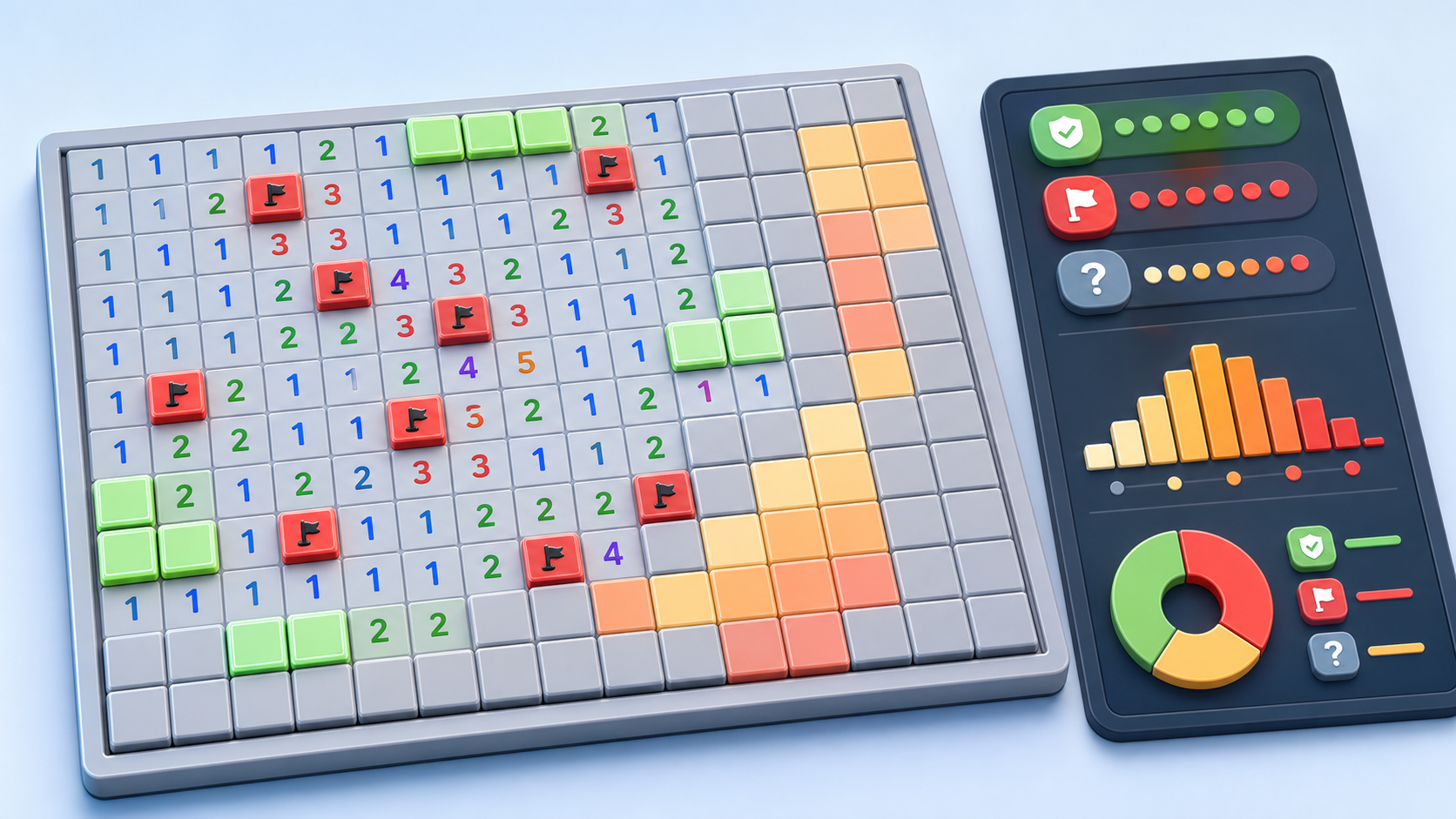
Use the recommended move as a cautious helper: click a logic-safe square when available, or recognize when the board has become a probability guess.
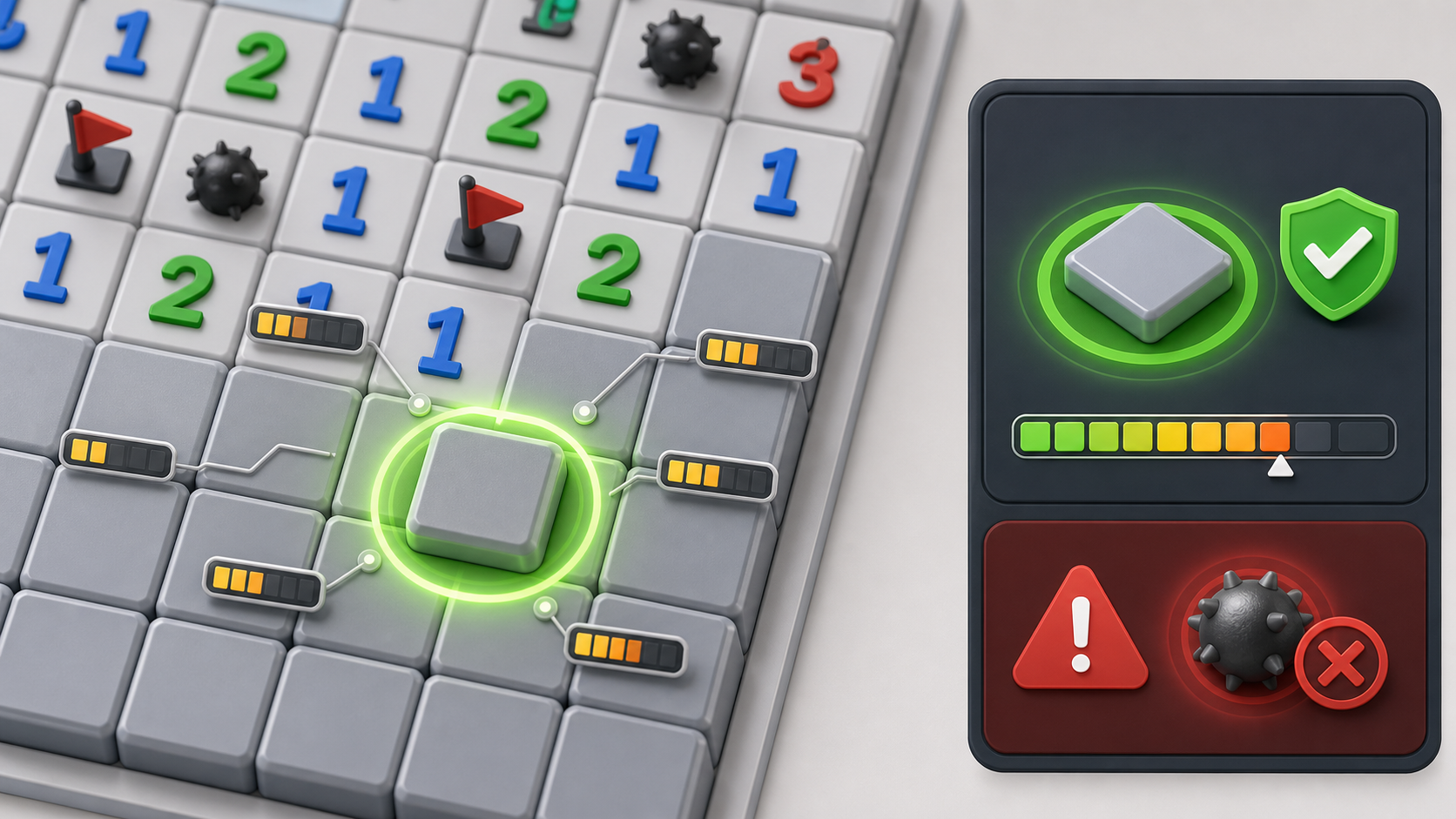
The Minesweeper Solver runs local constraint checks in your browser and does not need an external puzzle database.
Each opened number becomes a constraint: the adjacent unknown squares must contain exactly the remaining mine count after known mines are subtracted.
Connected unknown regions around numbers are enumerated locally. Squares that are mines in every valid arrangement are guaranteed mines; squares that are never mines are guaranteed safe.
When no logical move is forced, the Minesweeper Solver reports mine probabilities from the remaining valid arrangements and marks the recommendation as a guess.
Follow these steps to get accurate Minesweeper Solver logic, probability, and next-move output.
Choose the visible grid size you want to analyze. The total mine count is optional, but it helps the Minesweeper Solver estimate risk for hidden squares that are not touching any opened number.
Click a paint mode, then mark opened numbers, unknown squares, and known mines. A copied wrong number or a misplaced flag can create a contradiction.
Use guaranteed safe cells first. If the Minesweeper Solver only offers a low probability recommendation, the position may be a real Minesweeper guessing position.
A low mine probability is helpful, but it is not 100% safe. The page keeps logic-safe output and probability guesses visually separate for that reason.
Common questions about the Minesweeper Solver, Minesweeper Probability Calculator, and Minesweeper Helper on this page.
Yes. The Minesweeper Solver calculates mine probabilities for unknown squares that participate in local number constraints. If you enter the total mine count, it can also estimate risk for unconstrained hidden squares.
Yes. The page is a Minesweeper Helper because it tells you which squares are guaranteed safe, which are guaranteed mines, whether the board is contradictory, and what next move is most reasonable.
No. The Minesweeper Solver only guarantees cells listed as logic safe. Probability recommendations are not 100% safe because some Minesweeper positions genuinely require a guess.
A contradiction means at least one opened number cannot be matched by the known mines and unknown squares around it. Recheck marked mines, copied numbers, and whether the board region was entered correctly.
The tool groups unknown squares that touch numbered clues, enumerates valid mine placements for each local group, and reports how often each unknown square is a mine across those valid placements.
No. The Minesweeper Solver runs in browser JavaScript after the page loads. Board states, probabilities, and recommendations stay local to your device.
Very large connected unknown regions can be too expensive for exact enumeration in a browser. In those cases the Minesweeper Solver still checks direct contradictions and simple forced moves, but it may limit probabilities for that region.
SolverBox keeps puzzle helpers free, browser-based, and focused on the board or clue set in front of you.
After this Minesweeper Solver, browse more game, logic, number, and word solvers.
No account required - analyze Minesweeper logic and probability directly in your browser.